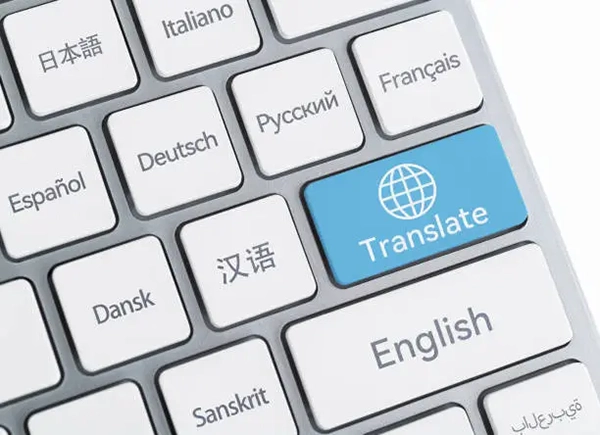
A multilingual website offers content in more than one language, letting visitors choose their preferred language to navigate and consume information. As global internet access grows, businesses need multilingual sites to reach non-English speakers and tap into fresh markets. Meeting users in their native tongue builds trust, boosts brand loyalty, and enhances user experience. Here in this article, we are going to explore their relevance more deeply and understand how you can use domain-specific elements and linguistic approaches in your website.
What Is a Multilingual Website?
A website that presents its content in more than two languages is a multilingual website. These types of websites have content pieces like service pages, homepage, articles, reviews, and testimonials present in different linguistic variants. Multilingual sites have optimized URL structures, HTML-XML sitemaps, subdomains, and all the vital technical aspects to become visible in targeted regions. Businesses planning such websites can also consider professional website development services to create a suitable technical foundation.
Why Should You Create a Multilingual Website?

Multilingual websites are expanding rapidly across the globe due to the effective benefits that they provide to engagement metrics and business improvement. Here, we are going to uncover 5 reasons why creating or switching to a multilingual website is worth it.
- 71% of total readers prefer English content, and targeting other languages will be a waste of time, but things are not that simple. This dense population in a single language carries large-scale competition, and targeting short-tail keywords to get first-page rankings becomes hectic. Instead, you can target readers from other nationalities to achieve ideal traffic on your site by writing content in their native languages. Countries like Germany, Russia, Japan, and Spain collectively have 21% of online readers, which can be your perfect audience.
- 76% of consumers across twenty-nine countries stated that they prefer shopping on sites that have product listings and descriptions in their native language in a CSA Research Survey. This states that adapting multilingual approaches for e-commerce sites brings great advantages, like an increase in sales, boosted brand perception, and improved credibility. Businesses expanding into online retail can incorporate these requirements into their e-commerce website development.
- Having service pages, homepages, product listings, and all the readable content present in the native language you are targeting makes your initial user experience more interactive, relatable, and personal. Also, it improves audience retention metrics because visitors can explore different parts of the website and explore it completely. A well-planned web design service can also help ensure that these language variations remain easy to navigate.
- Keywords in other languages have less competition and a large volume, which can be your next opportunity to capitalize on traffic and find potential overseas clients or products.
- The best part of having a multilingual website is that you won’t limit your growth to a single domain and its audience. You can reach the people who can avail your service or profit from different corners of the world. It will not only boost sales but also give a wide user base that will grow your numbers on social media handles too.
Multilingual vs. Multiregional Websites
Multiregional and multilingual are two different categories of websites in the market, but they also share similarities, as both are designed to improve reach across different regions. Multilingual sites promote a website by providing linguistic support to the audience, while multiregional websites primarily focus on addressing information based on local laws, trends, native policies, and informational assets in general languages like English.
To make comparison easy, we have crafted the chart below, which explains them across different categories.
| Key Aspects | Multilingual | Multiregional |
| Objective | A multilingual website serves content in the native language of the domain and eliminates linguistic barriers. | Multiregional sites are primarily focused on providing a tailored experience according to local laws, currencies, and cultures. |
| Example | A German Website is present in both German and English. | A Germany-based website made in English but has all the necessary information stacked for people living there. |
| Reach | Has more expansion potential because it targets audiences that speak a specific language across the globe. | Their reach is prominently targeted to specific geographic markets, and the population outside the targeted region claims no benefit. |
| Retention | Users tend to stay longer on these sites as they are able to perceive information that is present in their local language. | Visitors also like multiregional website because they see familiar currency, local customer support, and correct shipping times, which is great for engaging the audience, but sometimes a lack of appropriate translation options for languages makes them irrelevant. |
Read more: How to Create a Website Tree Structure and Why It Matters
How to Make a Multilingual Website

Creating a multilingual website requires a strategic approach consisting of multiple stages of identification, translation, testing, and execution. So here we are going to break down all these steps to understand the importance of each section with simple examples.
1) Identify your Target Audience
To identify your target audience and the nationality they belong to, as it helps you understand their local language, culture, and interests more deeply. This research will help you to foster more progressive brand strategies that will be driven by core elements like relatability, local references, and social activities.
2) Pick a Translation Approach
After all the research work and curating strategies around it, you now need to pick an ideal translation approach to make your pages linguistically accurate from top to bottom. In today’s AI era, most people prefer various NLP tools or neural networks like Google Translate to translate content presented on the website in a few clicks, but sometimes they can make mistakes, misinterpret statements, and change tones and pronouns.
Which is why there is a relevance of manual translation till date to achieve maximum accuracy in blogs, testimonials, reviews, service pages, etc. The best thing which you can do here is use automated translation for converting pages into different languages and then assign expert professionals to proofread and fix all the automation errors.
3) Select the Right URL Structure
Selecting the right URL structure according to the specific geographical domain and your translated language of the webpages is one of the most vital aspects of technical SEO, which you should not ignore. URLs that don’t indicate the location you are targeting or the linguistic knowledge you are providing will remain at the bottom of search engine ranking pages due to a lack of ideal indexing.
Instead, to improve your engagement and visibility, you must use domain-based subdirectories (example.com/fr/), Country-Code Top-Level Domains (ccTLDs) (example.de for Germany; each country has a different domain code), and Subdomains (fr.example.com or de.example.com).
4) Translation and Localization of Content
Translation does not only mean switching to a different language and expecting all the sentences, phrases, synonyms, and poetic devices to start making sense; in most cases, translation makes the content monotonous and unrelatable. So, to avoid such situations on your webpage, try hiring multilingual writers or conduct adequate research to add domain-based references that reflect cultures, their daily problems, root causes that can be fixed, and all the vital aspects that intrigue them to read more. This will make your content instantly more readable and improve website exploration.
5) Add Language-Switching Options
If you don’t want to take the long road of making language-specific domain pages along with changing URL information but still want an audience from multiple nationalities to access your website, then don’t worry; you can do that too. Adding language-switching plugins makes sudden translation achievable for multiple languages on both large and small websites. Below, in this section, you can see integration mechanics for adding language-switching options in Wix and WordPress.
- Wix Websites: If your website is made on Wix, then you can simply install the plugin called Wix Multilingual and add auto-translate options to your preferred webpages.
- WordPress Websites: In WordPress, plugins like Polylang or WPML do the language-switching job very well.
DigitalAddex Recommendation
For best accessibility, place the language switch option in the top left or top right corner in the desktop view, and while doing mobile optimization, place it within the navigation window or bar.
6) Optimize Each Language version for SEO
SEO optimization for every language you are targeting on your website is necessary so that search engines can present correct information to local audiences without any bugs or glitches. Conduct deep local keyword research, personalize metadata with relatable local references, and personalize the themes according to colors that people like the most there.
7) Test the Website Before Launch
Lastly, when you want to get complete assurance about your SEO metrics, language translations, URLs, and language-switching options, you need to conduct a test run before submitting your linguistic platform to the public domain. Check on demo servers for its translation speed, accuracy, and responsiveness. After ensuring the fine-tuning of all these utilities, release the site on your URL and check for audience responses in the initial phases.
Read more: What is Full Stack Developer? Skills, Roles, Career Path & Salary Guide
Multilingual Website SEO Best Practices

Here are some important measures that will make your website grow and become more visible on domain-specific search engine ranking pages. Read these best SEO practices that every multilingual website needs.
- Using the hreflang tag in your HTML headers or XML sitemaps is one of the most crucial aspects of overall SEO optimization for a multilingual website. It targets domains or languages present in the translated pages and provides indexing signals to browsers. For example (e.g., en for English, es for Spanish, en-gb for British English).
- Modifying URLs of domain-specific webpages makes their visibility sharper on the browsing pages through country-code top-level domains (ccTLDs like .co.uk or .de), as they send strong signals to search engines that a site belongs to a specific region, boosting local rankings. For example, if you are making content in German or for the people of Germany, then your URL should look something like this: https://de.example.com/.
- Always be sure to conduct a proper local keyword analysis and include them adequately in your content pieces to make them stand out against search engine competition. These domain-based keywords make your website visible in your targeted zone.
- Never try to enable redirection of linguistically optimized URLs to your main IP address, as it can block crawlers from proper search engine indexing.
- Don’t forget to implement all the important aspects of the translation in the metadata, like Meta title, Meta Description, alt tags, anchor texts, FAQs, and schema markups.
Common Challenges of Multilingual Websites
There would be challenges while making a multilingual website such as translation accuracy, content duplication, SEO mismanagement, etc. In this section, we have listed the common challenges faced with their solutions
- Translation Accuracy: Errors in word translations and changes in tone have to be the biggest drawback of integrating auto language modifiers, as their input is not entirely accurate in most cases. Due to this, your brand and service can lose reliability because readers will face constant problems while reading inaccurate terms or words in their native language. To fix this, you need to make manual changes in the algorithms of AI engines or applications by adding local slang, proverbs, and terms for each language.
- Handling too many variations: While making manual changes in the translation tools, you might face a problem that can consume a lot of your time and effort. Every language has multiple variations according to its geographical and cultural significance; for example, even English has so many variants like British English, US English, Indian English, etc. Set localisation rules, program the CMS to display regional dialects, and create separate dictionaries for different languages to tackle this problem
- SEO Complexities: Multiple languages always mean multiple optimizations, and this opens gateways for so many manual mistakes. Creating an SEO strategy for a single webpage is itself a heavy task, and different languages just add burden in practices like indexing, keyword research, and search engine rankings.
- Technical Implementation: While optimizing a multilingual website, some pitfalls occur in the technical aspects, like the usage of the wrong language or region codes (e .g., en-US instead of en-GB), adding wrong postal codes, and text expansions. Check the vital information of the website’s linguistic framework multiple times before making the platform live for the audiences.
- Regular Maintenance: Conduct a regular maintenance program and update all the necessary information to stay relevant among your target audience. Big firms handle this procedure conveniently, as they have a massive workforce, but small corporations or startups face a hard time doing it because of less team strength.
Read More: How to Link CSS to HTML? Step-by-Step Guide
Digitaladdex Recommendations
If you have a small-scale website and you are selling a service or a product that has a massive local demand, then first try to attract that traffic instead of prioritizing global expansion using a multi-language website.
strategies.
FAQs About Multilingual Websites
What is a multilingual website?
Any online platform that presents its content in more than two languages is considered a multilingual website.
How to make a multilingual website?
To make a multilingual website, first launch your webpages with detailed audience research on your preferred URL, then add AI bots or plugins to translate all the content. You can also post manually transcribed pages in different languages to your website to improve accuracy and readability.
What is the difference between multilingual and multiregional websites?
A multilingual website is a platform that produces content in more than one language, but a multiregional website makes appropriate modifications in blogs, service pages, legal policies, currency, etc according to different geographic locations to improve its visibility among the masses.
How does Wix multilingual work?
Wix is an application that has its own AI-based translator that modifies the webpages according to your selected language using neural engines like Google Translate. You can also make subtle modifications in revamping languages using manual translation with its built-in Translation Manager.
Are multilingual websites good for SEO?
Yes, multilingual websites are great for SEO as their reach is massive due to the integration of an automated translation feature for each web page. It also makes the platform more readable and credible, which positively impacts the metrics of audience retention.
How many languages should a website have?
It depends on many factors like your target audience, major traffic-serving countries, product listings, services, etc. If you are planning for a global expansion, then focus on the translation of the 33 major languages, but in the initial stages, English works well in most cases.
Conclusion
Multilingual websites are emerging as one of the most vital aspects for promoting awareness and reliability across nations, as they help to improve communication with target audiences using their native languages. If you are trying to make your business sustainable, then integrating automated translation engines into your digital platforms is necessary.
This integration comes with some potential challenges, like errors in tone, too many SEO-based optimizations, regular maintenance protocols, etc. However, they can be easily tackled if you have professional backend support, in-depth checking, and re-checking all the vital aspects of technical SEO. Always begin your multilingual expansion journey with only 2-3 languages along with English to make readability easier for readers and optimization for you. Don’t forget to follow Digitaladdex for more such content.
Sources:
- Working with multilingual websites by Google Search Central
- Best Practices for a Multilingual Website/Database by Boston Research Centre