Remote healthcare has not only transformed teamwork, but it has also made it more difficult to monitor employees. An employee of a team working remotely could be involved in the handling of patient documents, using EHRs, making phone calls, or communicating confidential data while on virtual consultations.
This implies that the monitoring software used by such organizations should not only serve to track the productivity of the employees but should also facilitate privacy, security, and compliance with the rules and regulations governing remote healthcare.
With such a variety of monitoring software, choosing the right one may become difficult. This guide compares five options worth considering, along with their features, pricing, compliance capabilities, and potential limitations.
Overview
For healthcare organizations and telehealth providers, it is impossible to apply employee monitoring software in the same way as in any other regular office. It might touch protected health information. That turns a normal software choice into a real compliance question. This guide ranks the top monitoring tools for healthcare and telehealth teams in 2026. It covers Apploye, Forcepoint DLP, Teramind, Insightful, and Veriato. Among these five solutions, Apploye comes out as the best fit for most healthcare and telehealth teams. It’s the only tool here that combines HIPAA and GDPR compliance with a full set of everyday business tools. That includes time tracking, screenshots, invoicing, and payroll, all in one place. It also costs far less than the dedicated compliance platforms on this list. Moreover, its price is much lower compared to other solutions designed specifically for compliance.
Top 5 Remote Employee Monitoring Tools for Healthcare and Telehealth Teams (Must Check)
It turns out there is a special rule when it comes to monitoring healthcare, which no other industry has to consider.
Every screenshot, every activity log, every piece of data your monitoring tool captures has to stay clear of protected health information, or you’re looking at a real compliance problem, not just a bad software choice.
This was the criterion that helped us evaluate the following monitoring tools. Here’s how the top options for healthcare and telehealth teams actually compare in 2026, based on real compliance features, real pricing, and where each one falls short.
1. Apploye
Apploye is a remote employee monitoring platform and time tracker designed to be used by remote teams.
For healthcare and telehealth teams, it offers HIPAA and GDPR compliance on its Enterprise plan, which makes it a good option for practices that need real oversight without paying for a full security suite meant for hospitals with big compliance departments.
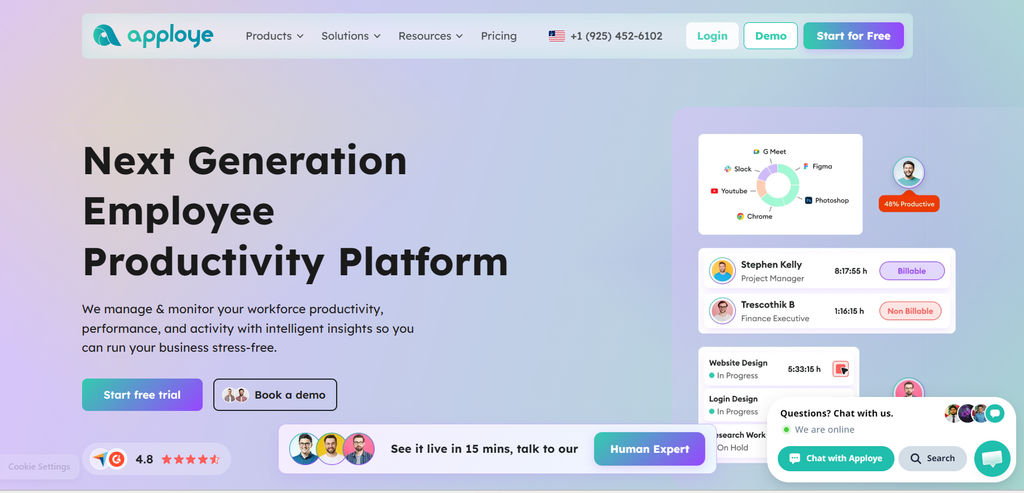
In addition to this, the platform consolidates all of these features into a single dashboard. You get time tracking, screenshots, activity monitoring, project budgeting, invoicing, and payroll, all in a single dashboard.
Admins can turn monitoring features on or off per team too. That matters a lot in healthcare. Clinical staff handling patient records can be set up differently than billing or scheduling staff, so sensitive roles aren’t monitored the same way as everyone else.
This can be particularly beneficial to telehealth businesses that employ remote nurses, care coordinators, or billing professionals in different time zones.
You’re not stuck with one setting for the whole company. That helps keep patient information away from areas where it doesn’t need to show up in the first place.
Apploye also gives you a Live Feed to see who’s working right now, which helps with coordinating shift-based telehealth staff.
Here, pricing starts with a free plan for up to 10 users. Paid plans begin at $4.50 per user per month. HIPAA and GDPR compliance come with the Enterprise plan, which is custom-priced, so healthcare organizations should reach out directly for a quote.
Still, unlike other dedicated security software solutions that may cost from $15 to $60 or even more per user, Apploye provides an affordable option for healthcare institutions.
One thing worth pointing out is how much Apploye has grown since 2025. The team has been developing new features at a steady pace, from deeper reporting tools to more flexible monitoring options. It gives admins more control over what gets tracked and where.
This kind of momentum matters for healthcare organizations picking a tool for the long run, since it’s a sign the platform is actively being built out rather than sitting still.
The continuous flow of improvements will become very valuable for those who wish to develop into a monitoring tool in a couple of years.
For healthcare organizations managing large support or scheduling teams, Apploye can also work as call center time tracking software, helping managers track working hours and activity without relying on a separate system.
Essential Features for Healthcare Teams:
- HIPAA and GDPR compliance is available on the Enterprise plan
- Screenshot and activity monitoring can be turned on or off per team, useful for separating clinical staff from admin staff
- Automatic time tracking that works online and offline, down to the project and task
- Built-in payroll and invoicing system, good when the practice is charging by the hours of individual providers
- Role-based reporting, so managers only see what’s relevant to their own team
- Live Feed showing currently active users, good for coordinating telehealth personnel on shifts
- Reports you can export for compliance reviews or staffing decisions
Best for: Healthcare practices, telehealth companies, and medical billing teams that want solid oversight, time tracking, and payroll in one place, without paying for a dedicated compliance suite they don’t fully need.
Pros:
- Monitors, times, pays, and bills everything in one product; you don’t have to use different products
- HIPAA and GDPR compliance available without needing a dedicated security platform
- You can set different monitoring rules per team, so patient-facing roles aren’t treated the same as back-office staff
- Noticeably cheaper than compliance-heavy tools like Teramind or Veriato
- Easy dashboard that requires minimal technical skills to maintain
- Already used by teams as large as 1,500 people
Cons:
- No GPS tracking for field employees
- Some teams might not need all the advanced monitoring features
2. Forcepoint DLP
Forcepoint DLP isn’t really an employee monitoring tool in the usual sense. It’s a data loss prevention platform that happens to include behavior-based risk scoring on top.
Actually, Forcepoint DLP is designed for highly regulated industries such as the health care industry, and it is a tool that is used to monitor the movement of sensitive data such as Protected Health Information (PHI) across the enterprise.
No pricing information is available, and a custom quote from Forcepoint needs to be made via a request form.
Industry estimates put enterprise deployments somewhere between $30 and $60 per user per year, though actual healthcare contracts often run higher once implementation and hardware requirements get factored in.
This is genuinely heavy, enterprise-grade software, and it comes with a real cost of ownership beyond the license price. But it needs fairly resource-intensive infrastructure just to run properly.
For organizations with fewer than approximately 200 users, this overall cost simply isn’t worthwhile.
Forcepoint mostly makes sense for large healthcare networks. It needs one unified policy engine covering data protection across every channel at once, not a lighter, day-to-day activity monitoring tool for a smaller practice or telehealth startup.
3. Teramind
Teramind is one of the more established names in healthcare-focused monitoring.
As a general rule, it is delivered with a signed BAA and an OCR-based exception for screenshots. In other words, it is capable of detecting and blocking sensitive medical information even before the process of capturing occurs, and not based on the standard list of forbidden applications.
It also tracks how data moves across email, cloud apps, USB drives, and clipboards, and can automatically block or flag risky actions in real time.
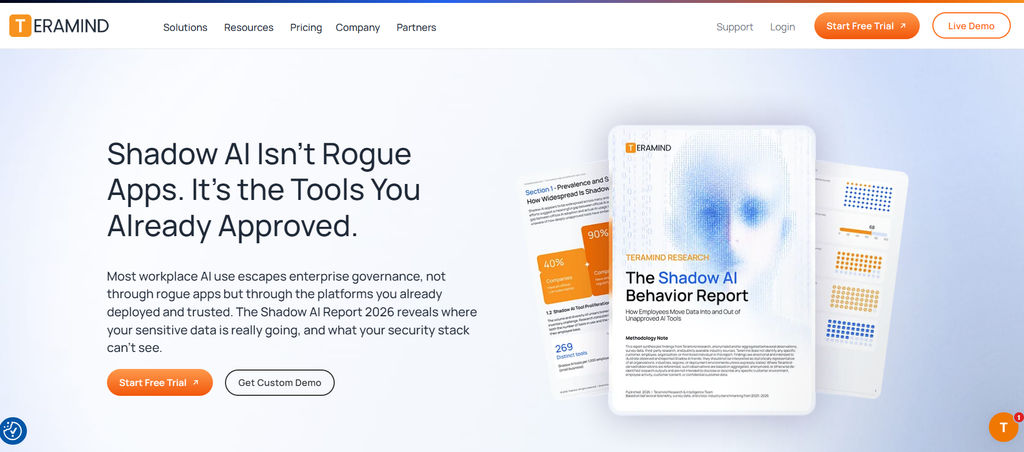
This depth of monitoring sounds appealing on paper, but it comes at a real cost. Pricing starts around $15 per user per month, and there’s a minimum of five seats required just to get started, so smaller teams don’t have much room to test it out first.
It also has several other gaps. It doesn’t monitor phones, and it doesn’t support Linux systems either, which matters if your organization runs a mix of devices.
Teramind is quite an appropriate choice for hospital systems or large telehealth providers that already have a dedicated compliance team in place to manage its setup and configuration.
But for smaller practices, the combination of cost, seat minimums, and device limitations makes it more of a tool than most day-to-day operations actually need.
4. Insightful
Insightful, formerly Workpuls, has an easygoing approach when it comes to the health monitoring process in comparison with some other applications featured in the list.
Instead of capturing everything by default, it lets admins turn off activity tracking and screenshots for specific apps, websites, or time periods, which is a fairly simple way to keep patient information out of the monitoring system.
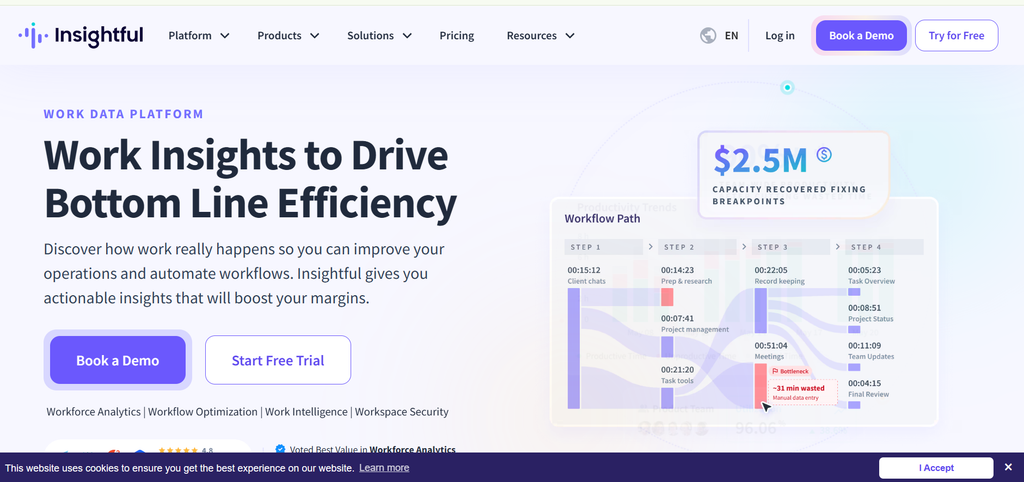
It also includes IT forensics tools meant to help identify who was responsible if data goes missing, which is relevant given HIPAA’s requirement to account for lost information.
Here, pricing ranges from about $8 to $16 per user per month depending on the tier, though a signed BAA is usually reserved for the Enterprise plan specifically, not the lower tiers.
Its biggest drawback is that the software does not provide any payroll functionality. So healthcare organizations that want billing and monitoring in the same place will need to pair it with a separate payroll system, adding another tool to manage.
It’s a reasonable option if your main concern is narrowly focused on keeping screenshots away from patient-facing screens. But it doesn’t offer the broader operational features some healthcare teams may also need.
5. Veriato
Veriato is built for organizations with serious, ongoing concerns about insider risk.
And indeed, the health sector is among those industries where such an issue is often raised, due to the value of the sensitive patient data.
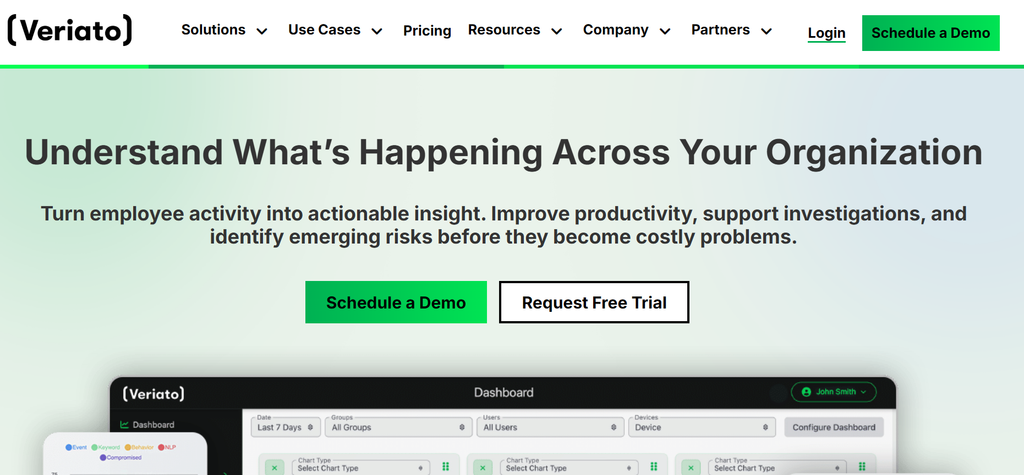
It signs BAAs and offers PHI exclusion at the application level, going further than other software here with AI-driven behavior analysis that assigns each user a daily risk score.
This sounds like an amazing level of detail, but it comes with real trade-offs. Pricing starts at $25 or more per user per month, and there’s no free plan available at all
Plus a minimum license requirement depending on which plan you choose. That makes Veriato one of the pricier options on this entire list, with no low-risk way to test it out first.
It’s genuinely built for hospital systems or large healthcare networks running formal insider threat programs, not smaller telehealth startups or single-location clinics that just need everyday oversight.
For most healthcare organizations outside that narrow use case, it’s a lot of tools and a steep price for something a lighter platform could likely handle instead.
Which One Should You Choose?
To be honest, for most healthcare and telehealth teams, Apploye is the clear standout. It’s the only tool on this list that combines HIPAA and GDPR compliance with a full set of everyday business tools.
In addition, time tracking, screenshots, productivity tracking, budget management, invoicing, and payroll are included. All of it lives in one dashboard. That matters a lot for mid-sized practices and telehealth companies.
Most don’t have a dedicated compliance department. Apploye gives them real oversight without stitching together five different tools.
The key feature of Apploye is the flexibility. Admins can turn monitoring on or off per team. Clinical staff handling patient records don’t have to be monitored the same way as billing or scheduling staff. That kind of role-based control matters a lot in healthcare. Not every tool on this list makes it this easy.
Pricing is where Apploye really pulls ahead. Paid plans start at just $4.50 per user per month. HIPAA and GDPR compliance come with the Enterprise plan.
So, let’s compare it to Teramind, which costs around $15 per user per month. Or Veriato, at $25 or more, with no free plan at all.
However, Forcepoint and Proofpoint don’t even publish price information. Both typically land in serious enterprise budget territory once fully deployed. For healthcare teams that want solid compliance without hospital-sized pricing, Apploye is a good choice to begin with.
But How You Can Choose the Right Tool for Your Healthcare Team?
Picking the right monitoring software for a healthcare team isn’t as simple as comparing prices and feature lists. One wrong choice, and you could end up with a real HIPAA problem, not just a bad software fit.
That’s why, before you sign up for anything, here’s what you should check first, so you land on a tool that protects patient data and still gives you the visibility you need.
First, Start with your BAA requirement.
If any part of your monitoring setup could touch protected health information, verify that the vendor will sign a Business Associate Agreement before you go any further.
Second, check how PHI exclusion actually works.
Some applications block certain apps automatically. Others rely on you to set it up manually. Know which one you’re getting so nothing sensitive slips through.
Third, match monitoring depth to the role.
Clinical staff handling patient records may require different settings than billing or scheduling staff. Look for tools that let you set this up per team.
Fourth, get compliance and legal involved early.
HIPAA requirements aren’t just a checkbox. They need real sign-off from your compliance officer or legal counsel before you roll anything out.
Finally, price it out at your real team size, compliance tier included.
HIPAA features are usually locked behind a higher plan, so the advertised starting price rarely shows what a healthcare deployment actually costs.
Last Note
Choosing remote employee monitoring software for healthcare comes down to one real question. How well does it protect patient data while still giving you honest visibility into your team?
Well, Apploye answers that question well for most practices and telehealth companies. It offers HIPAA and GDPR compliance alongside time tracking, billing, and payroll. And it does this at a fraction of the cost of dedicated compliance platforms.
Teramind, Veriato, Forcepoint, and Proofpoint go deeper into insider threat detection and data loss prevention. But they’re built for large hospital systems and healthcare networks.
Most have dedicated security teams and much bigger budgets. Insightful and ActivTrak sit somewhere in the middle. They offer lighter, more configurable monitoring, but without the full toolkit Apploye provides.
All in all, whichever tool you choose, get your compliance officer involved early. Confirm a signed BAA is in place. Set monitoring rules by role so patient data stays protected from day one.
Frequently Asked Questions
Do all employee monitoring tools need a BAA for healthcare use?
Only if there’s a chance the tool could be exposed to protected health information, even by accident through a screenshot. If that risk exists, you need a signed BAA to stay HIPAA-compliant.
What’s the difference between HIPAA-compliant and HIPAA-exempt monitoring software?
HIPAA-compliant tools are built to handle patient data safely, with BAAs, screen exclusions, and audit logs in place. HIPAA-exempt tools simply avoid collecting anything that could count as patient data in the first place, often by tracking only productivity numbers instead of screenshots or content.
Can Apploye handle HIPAA compliance for a telehealth company?
Yes. HIPAA and GDPR compliance are available on Apploye’s Enterprise plan, along with account provisioning and SSO. Smaller practices on lower tiers would need to upgrade to get these features.
Is screenshot monitoring safe to use around patient data?
It can be, as long as the tool lets you exclude certain apps or windows from capture. Without that kind of exclusion, screenshots risk capturing patient information by accident, which creates real compliance problems.
Which tool is best for a small telehealth startup versus a large hospital system?
Apploye tends to fit smaller and mid-sized telehealth teams well, since it combines monitoring, billing, and payroll at a lower cost. Larger hospital systems with dedicated compliance teams often lean toward Teramind or Veriato for their deeper forensic and risk analysis tools.