In a world where there are thousands of websites serving the same purpose, you always choose that particular site you like the most because of a fast response or an eye-pleasing color scheme. Well, that’s not just a coincidence; it is a systematic process that combines effective web development and modern responsive design practices to create a trustworthy digital experience.
So if you want to learn what makes a good website that has all the ingredients to be trustworthy and engaging for the audience and want to implement new strategies to improve your business performance and credibility, then you are in the right place. Here, we are going to explore this concept in detail and understand why responsive design matters in a good website in 2026.
Before you start
- First things first: test your website on multiple devices.
- Prioritize the optimization and mobile responsiveness of the website.
- Do not forget to check the page load speed on the entire site.
- Enable HTTPS security protocols for all the webpages.
- Always ensure to optimize your platform for SEO.
- Review accessibility of all working landing pages, toggles, CTA, and buttons.
- What Makes a Good Website?
- Qualities of a Good Website
- What is Responsive Website Design?
- What is the Role of Website Page Load Speed in a Good Website?
- Why Does a Secure Website (HTTPS) Matter?
- Good Website Design Examples
- Common Website Mistakes to Avoid
- Website Maintenance Best Practices
- Frequently Asked Questions
- Final Thoughts
What Makes a Good Website?
A website is considered good when it consists of all the elements that promote various positive factors like user engagement with extensive UI and UX, credibility, search engine rankings, improved conversion rates, and strong brand perception among the target audience.
Fulfilling these norms is not that challenging but requires a strong implementation strategy which includes new page practices like mobile optimization, responsive design, algorithm assessment, appealing themes, intriguing catch phrases, haptics-friendly toggles, and search engine optimization. Businesses that invest in professional website development services often achieve better performance and scalability. For complex, large-scale platforms, working with an enterprise web development company can also help businesses build secure, scalable, and high-performance digital solutions.
Qualities of a Good Website

As discussed in brief earlier, some vital elements make an immersive website for almost every purpose, whether business, NGO, content, education, etc. The ideal qualities of a good website that you should implement too in your venture are:
1. Clear Purpose and Goals
First of all, your goals and aspirations for your business or project should be determined before you move anywhere further, as it allows you to make clear projections about its sustainability and profitability. Simply analyze all your goals in detail before making any creative changes.
2. Simple and Intuitive Navigation
Now here comes the tricky part: if you don’t come from a technical background or do not have any technical expertise, then you need to reach out to an expert provider of web design services like Digitaladdex, which can help you find the perfect navigation layout for your brand according to trends and market fit.This factor is very important and has to be done perfectly because it makes users stay on your website longer and stops them from hopping to different sites.
3. Consistent Branding
Creating a brand value that is honest and consistent is very important for surviving today’s competition because all your competitors are promoting or selling almost similar things. This perception-based marketing strategy of your website will help you to stand out in front of your competitors and compel more traffic.
4. Fast Performance
Fast loading, graphic rendering speed, layout, and optimized toggle are something that every user craves, which is why rapid performance is necessary to promote your overall website infrastructure. You can achieve it by not adding heavy elements and keeping the design language simple.
6. High-Quality Content
High-quality content is something that you must have in your arsenal before and during the deployment of your website because it helps to maintain your search engine rankings on top pages and provide an upper edge among your competitors. It also improves the credibility of your platform by enhancing your domain and page authority.
7. Easy-to-Read Typography
You must present all the written content in easy-to-read typography, which helps to capture the attention and retention of the audience at first glance. Doing this is very simple, as you just have to use texts which are bold, aligned, and visible.
8. Strong Calls-to-Action (CTAs)
Having strong CTA buttons makes so many things easier because they allow users to submit credentials easily, decrease bounce rates, capture more attention, which ultimately leads to more sales and actionable advancements.
9. Search Engine Optimization (SEO)
All these things lead to a massive impact on search engine optimization (SEO) because all the web algorithms provide you rankings based on factors like high-quality content, strong CTA, branding, navigation, etc. Also, good search engine optimization can bring organic traffic to your platform by increasing your reach on your targeted keywords.
Read more: How to Choose a Web Design Company? Top 6 Popular Web Design Agency Recommendations
What is Responsive Website Design?
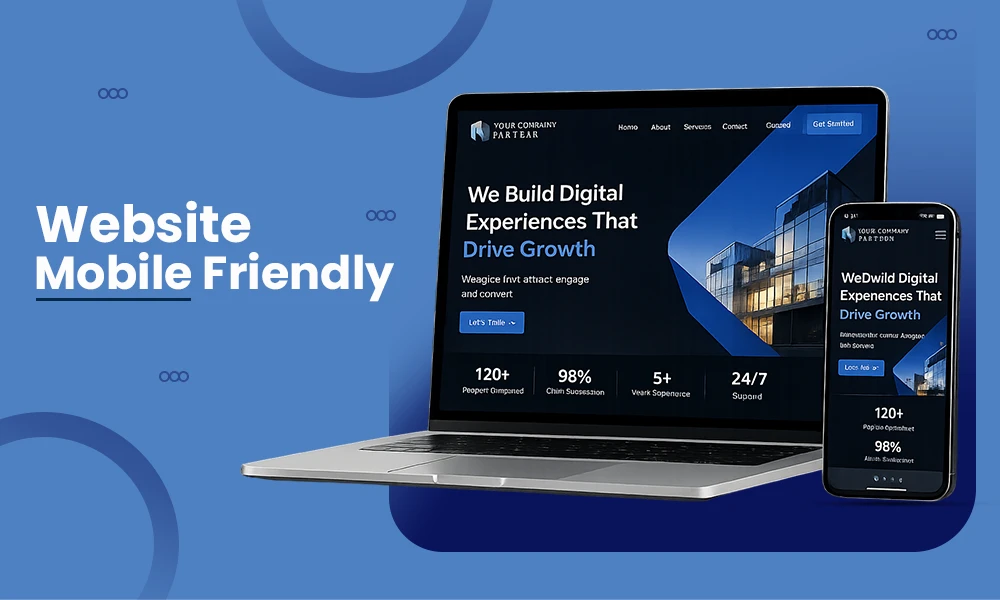
Responsive Website Design is a systematic approach to blend and optimize the experience of a website according to different screen sizes without limiting user experience and useful features, providing them a complete set of accessibility features.
It primarily focuses on a mobile-friendly website in which layouts, containers, typography, elements, and theme are centralized according to tablet and mobile screens, which is important for both higher search engine rankings and fostering a personalized experience.
The best responsive design strategy relies on flexible grids, media queries, and adaptive components that automatically adjust to various devices.
What is the Role of Website Page Load Speed in a Good Website?
Looking at today’s robust competition, website page load speed plays a very vital role in advancing growth and quickly allows users to visit your website before they change their mind and take a step back.
Factors That Slow Down Websites
Website page load speed depends on some pivotal factors which we often ignore because they don’t seem unusual, but in reality things are pretty different. The loading speed of your pages is actually slowed down by these four prominent reasons:
- Large images present on articles, blogs, and testimonials.
- Excessive scripts and long phrases present in homepages.
- Poor hosting service provision or server downtimes.
- Too many plugins presented within the platforms.
However, in some special cases, things might go off track beyond them, and the reason can lie beneath the coding database, server architecture, and surge in mass traffic, which cannot be easily determined at first glance.
Tips to Improve Page Load Speed
Improving loading speed is not much of a critical job, as some basic fixes are enough to make it necessary. To reduce the loading speed, what you can do is:
- Compress the quality of images present all over the platform.
- Limit HTTPS listings for every web page, image, or video.
- Stop relying on external plugins for everything.
- Look for a better hosting service if the one you have is disappointing you.
- Try to make UI and UX as simple as possible.
Why Does a Secure Website (HTTPS) Matter?
HTTPS (Hypertext Transfer Protocol Secure) is an encryption-based security coding that protects user data from being compromised or hijacked when visiting numerous sites on the internet. Without this, any website is incomplete and not ideal for submitting any credentials.
Why HTTPS Is Important?
HTTPS is very important to verify the condition and authenticity of a website, as it indicates that everything is properly encoded with security norms and not vulnerable to threats or malicious activities. Also, when a website lacks HTTPS, browsers such as Chrome show a “Not Secure” indication beside the URL, which will cause users to fall back from your platform due to security concerns.
Security Best Practices Beyond HTTPS
For the safety of your websites, some best practices can be easily used or implemented alongside HTTPS, like:
- Multi-factor authentication (MFA).
- Using limited API gateways.
- Conducting regular maintenance and security audits.
- Not linking unverified sources.
- Implementing security from hosting services.
Read more: Best Web Hosting Services in 2026: Tested, Compared & Ranked
Good Website Design Examples
To make things clearer and define the characteristics of a successful website more realistically, we are now going to tell you some real-life examples of all credible sources that are ideal according to their specific niche. Businesses planning to build or improve an online store can also work with an e-commerce website development company to create a responsive shopping experience with intuitive navigation, secure functionality, and mobile-friendly product pages.
1. E-commerce Websites
The most popular websites on the internet are nothing but e-commerce websites like Amazon and Alibaba, as they revolutionized the formula of shopping for the masses and provided the comfort of getting everything at home. Most e-commerce websites are designed responsively so that they work perfectly fine on both mobile and PC without limiting any feature.
2. Portfolio Websites
Portfolio websites are the most integral part of the professional showcase of businesses and individuals, as they make projects and personalities presentable among the masses so that users can engage with ideas and reactions. They are mostly built to be experienced in wide-screen formats and get condensed when projected in mobile displays.
3. Blog Websites
The internet has countless blog websites like Billboard and Forbes that have been providing credible information and valuable insights for years now, and that’s why they are optimized for all layouts and screen sizes to improve the reading experience and bring accessibility for educating users across the globe. They also focus on easy-to-read typography by optimizing texts, images, and links.
4. Nonprofit and Educational Websites
Nonprofit and educational websites like Oxford and Britannica are the backbone of academic institutions across the globe because, without reaching out to talented students, arranging study materials, promoting their performance benchmarks, and leading them towards a bright future, it was nearly impossible. To promote values, awareness, and promotional campaigns, they are highly optimized for every device.
5. What These Websites Have in Common?
The one thing that is most common in these website formats is that they are leading towards responsive design approaches, which helps them to establish a connection with their target audience across formats, making their conversions easier and more profitable. Also, having accessibility in multiple formats improves engagement and word of mouth, which is necessary for making the website successful.
Common Website Mistakes to Avoid

In the entire process of making the website more interactive or optimized, there are high chances that some mistakes can be made, which can cause so many issues in your online product, like:
1. Slow Loading Pages
Slow landing pages can cause immense disruption in your framework or site performance because it won’t let the audience enter your platform, which will bring a serious dip in leads and reachability among your target audience.
2. Poor Mobile Experience
Lack of mobile experience in platforms is a big loss for any venture out there, as people demand accessibility more than big offers or regular sales. Most of the audience uses their phones for almost everything, and providing complete optimization implements a sudden boost.
3. Confusing Navigation
Having a confusing navigation on your website can disrupt the entire flow of accurate information and landing pages that are necessary for gathering user data for successful conversions. Making navigation easy allows users to explore your platform easily and intrigue their curiosity, which makes them stay and invest more.
4. Weak Calls-to-Action
Imagine making a good website with an appealing theme and perfect layout, but when a user tries to engage with your platform, your CTA buttons miserably fail; this condition can leave a very severe negative impact. Instead of ignoring these small mistakes, strengthen your CTA buttons and integrate them precisely with your desired responses.
5. Outdated Content
The presence of outdated generic content on your website in today’s modern world basically does not have any motive or valuable insights in useless because AI can generate loads of such content within a few seconds. The best thing you can do here is publish well-researched articles authorised by experts, post reviews or testimonials that feature honest client feedback, and place a catchy tagline in the headers, which will improve your overall search engine ranking and page game.
6. Lack of HTTPS Security
Lack of HTTPS security protocols can harm your online platforms very severely in terms of both infrastructure and audience trust, as malicious entities can breach your system anytime to hijack the server command, making you feel helpless and devastated. Improving security protocols by constantly conducting audits is a must if you are running a platform where thousands of students engage every day.
Website Maintenance Best Practices
Last but not least, we have to talk about the best practices of website maintenance, which keep it sustained and credible for the audience. After studying all the good website design examples, we advise implementing some attributes in your website like:
1. Update Content Regularly
Updating content regularly is a must in 2026 because every month there is a new variation in search engine policies, which provides refined guidelines that support the algorithm of search engine ranking pages. To keep up with the competition, you need to foster more realistic, engaging, and readable elements on your platform, which is also integral for enhancing SEO metrics, domain and page authority. For businesses that need ongoing technical support, security updates, and performance monitoring, professional website maintenance services can help keep the website stable, secure, and up to date.
2. Monitor Website Speed
A routine check-up of website loading speed is very necessary to obtain or retain the traffic coming from across devices, as it allows people to get their work done properly without any delays. Whether you sell products or solve queries, you need to have short downtime for holding sustainable internet search page rankings.
3. Check for Broken Links
Verify that links and tags are intact across your platforms and in the overall navigation so that visitors won’t experience a degraded experience while reading or hopping to different pages; remember, it is very important for creating a first-sight impact.
4. Keep Software and Plugins Updated
Always keep your software updated and regularly change or maintain the plugins also because their constant change in nature ensures their reliable performance. Neglecting this factor can harm your website due to recurring bugs and glitches present in the older versions of platforms.
5. Perform Regular Security Audits
Performing regular security audits allows you to identify security loopholes, loose ends in design infrastructure, and minor breakdowns in databases, which can disrupt the integrity of the website. Also, it is important to regularly improve security measures, as neglecting them can lead to serious problems such as data breaches and damage to the framework.
Frequently Asked Questions
What makes a good website?
A website is considered good when it has the presence of all the necessary elements that maintain the security framework, user experience, and user interface without any disruptions, along with multiple device accessibility.
What are the qualities of a good website?
A good website has some basic and effective integrations like mobile optimization, CTAs, haptics, and layouts, which make user engagement more delightful and intuitive.
What are the characteristics of a successful website?
A successful website has all the metrics that have all the user-integrated features like security encryption, active toggles, landing pages, buttons, etc to sustain the visitors and convert them into profitable leads.
Why is responsive website design important?
It is primarily important for two reasons: first, responsive website design is necessary for maintaining sustainability in today’s competitive market, allowing users of all devices to foster connection. Second, it improves brand value and growth through consumer reliance.
How does website page load speed affect users?
Loading speed is a very integral part for any website in search engine ranking pages because if it is on point, then users will interact with it more, while lower speeds lead to frustration, which makes them take a step back from your platform.
What makes a website mobile-friendly?
A website is considered mobile-friendly when the layout, design, containers, texts, CTA, and haptics are customized according to the mobile and tablet screen sizes, making them responsive and optimized with all the existing features present for computers.
Why should every website use HTTPS?
Every website should use HTTPS because it is important to maintain the resilience of data and the framework of security.
What features should every website have?
According to Digitaladdex, every website must have mobile optimization, as it is important for both SEO practices and improving user experience to improve retention rates, which further leads to their potential conversion.
How can I improve my website’s performance?
Well, there is a systematic process of improving website performance, which includes the integration of various elements, optimization of integral parts, and security management.
Final Thoughts
That’s the complete exploration that tells us what makes a good website for all the categories out there in the market, and if you are curating your site for whatever purpose, you need to acknowledge some component factors like optimum loading speed, mobile responsiveness, excellent reading sections, etc.
Also, prioritize that there are no loose ends present for people to notice, which can degrade their overall user experience, like security loopholes, mismatched triggers, distorted CTA, hard navigation, etc. It is obvious that while optimizing your website, you can face some common problems like rendering or deployment issues, which is why you need to opt for expert web design services like Digitaladdex to get tailored solutions and expert surveillance 24/7. Stay tuned for more such insightful articles.