A single second of server downtime can kill your traffic, revenue, and Google rankings. Your website’s uptime and speed are the backbone of your online presence. We spent hundreds of hours stress-testing the industry’s leading hosting providers. In this blog, you will see web hosting service types, the 7 buying factors to consider, and get hands-on, data-backed reviews of our top 7 recommendations. Also, get tailored matches for beginners, small businesses, digital agencies, and WordPress creators.
Quick Pick Table:
| Host | Starting Price | Best For | Key Strength |
| Hostinger | $2.49/mo | Budget-conscious users and handling traffic spikes |
|
| SiteGround | $2.99/mo | Premium WordPress users |
|
| GreenGeeks | $1.95/mo | Eco-conscious brands and fast loading speed |
|
| HostArmada | $1.49/mo | All-inclusive features under budget |
|
| DreamHost | $2.89/mo | Managing multiple websites |
|
| IONOS | $1.00/mo | Low starter costs |
|
- What Are Web Hosting Services?
- Types of Web Hosting Services
- How to Choose the Best Web Hosting Service – 7 Factors to Consider
- The Best Web Hosting Services in 2026 – Our Top Picks
- Which Web Hosting Service Is Right for You? (By Use Case)
- Domain Hosting vs. Web Hosting – What's the Difference?
- Final Verdict – Which Web Hosting Service Should You Choose?
- Web Hosting Services: Frequently Asked Questions
What Are Web Hosting Services?
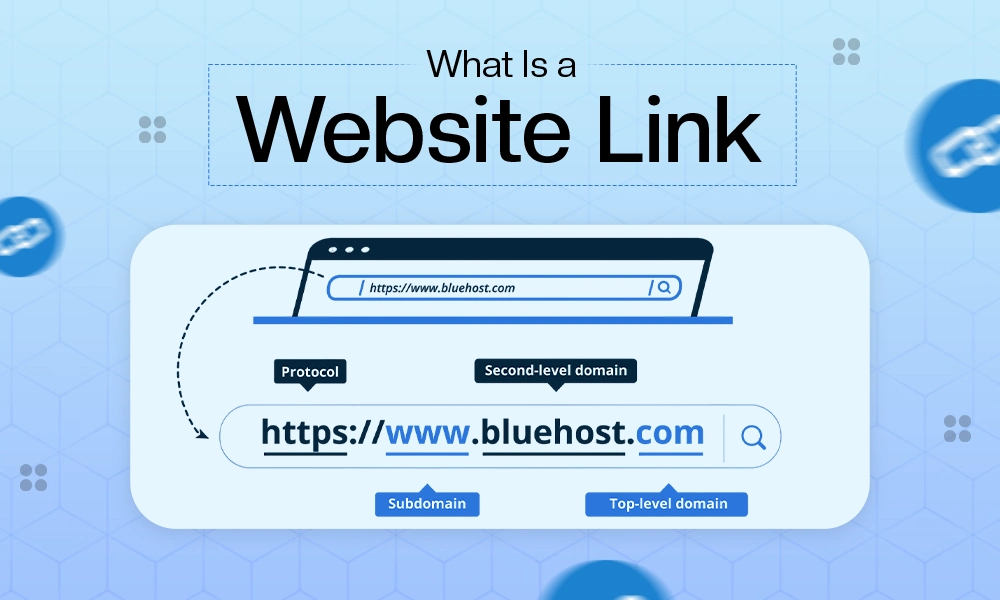
Web hosting services are online services that provide the physical server space and connectivity with technologies required for individuals and organizations to publish their website live on the internet after web development. Imagine your website is a house. Your domain name (like yoursite.com) is the physical street address, and web hosting is the actual plot of land you rent to build and store your house upon. Without that plot of land, your house has nowhere to sit.
A web hosting provider is the company that owns and maintains these plots of land. They run specialised servers that stay turned on and connected to the internet 24 hours a day, 365 days a year.
Building a website involves creating a collection of different files, text, images, and databases. You upload all of this data into the provider’s server. When a user types your website address into their browser, their computer instantly connects to that specific server over the internet. The server quickly reads your files and sends your website pages right back to the user’s screen.
GLOBAL WEB HOSTING SERVICES MARKET OVERVIEW
Market Size:
- 2025 Value: USD 149.30 billion
- 2026 Value: USD 178.76 billion
- 2034 Forecast Value: USD 661 billion, with a CAGR of 17.80% from 2026 to 2034
Types of Web Hosting Services
Choosing the right setup is important for your site’s performance. The five main options you will find are shared hosting, VPS hosting, dedicated hosting, cloud hosting, and managed WordPress hosting, which we will see in detail below.
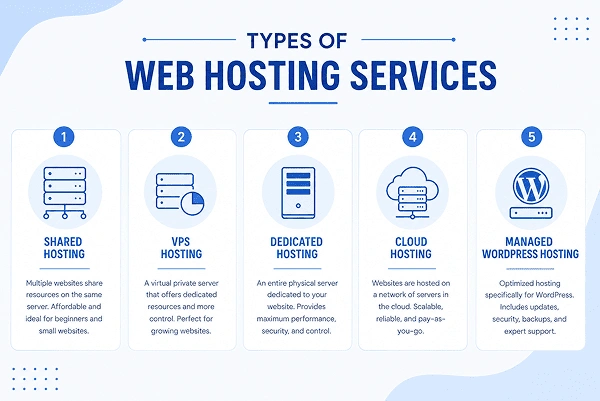
Shared hosting is a web hosting service where multiple websites reside on a single physical server and share its core resources (such as RAM, CPU, disk space). It is the most affordable option available as the operating costs of the server are split among hundreds of users. This is the entry-level web hosting service on the market.
Best for:
- Personal bloggers
- Portfolios
- Small local businesses
- Non-technical users
Shared Hosting Provider:
- Bluehost: The best overall provider for shared server setup.
- Hostinger: The top choice for budget-friendly shared hosting.
VPS Hosting (Virtual Private Server)
VPN hosting is a service that uses virtualization technology to split a single physical server into multiple private virtual servers. You are given dedicated server resources (like RAM and CPU), still sharing the physical machine with other users.
Best for:
- Growing business
- Medium traffic sites
- ecommerce website development
VPS Hosting Provider:
- Hostinger: The most accessible choice from our list for affordable virtual private servers, also ranked in the top 10 by Forbes.
Dedicated Hosting
Dedicated hosting is a premium service where an individual or business rents and controls an entire physical server for their website/application. It gives high speed and customization power. No resources are shared with any other user.
Best for:
- High-traffic sites
- Enterprise applications
- Custom software operations
Dedicated Hosting Provider:
- IONOS: The most secure and enterprise-ready infrastructure.
Cloud Hosting
Cloud hosting is a modern web hosting service that distributes your website’s data across an interconnected network. Multiple virtual and physical servers are used instead of relying on a single physical machine.
Best for:
- Sites with unpredictable traffic
- SaaS apps
Cloud Hosting Provider:
- HostArmada: The best cloud- based provider for steady speeds.
- GreenGeeks: For eco-friendly and fast-loading web cloud hosting.
Managed WordPress Hosting
Managed WordPress hosting is website hosting services made to optimize WordPress speed and security. The hosting provider handles all administrative tasks such as automated daily backups, software updates, caching, and malware scanning. Regular monitoring and updates are also essential for keeping a website secure and functional, making website maintenance services an important consideration beyond hosting.
Best for:
- WordPress site owners
- Agencies and freelancers
- Non-technical creators
Managed WordPress Hosting Provider:
- SiteGround: For fast and managed WordPress sites.
- Bluehost: The easiest managed option for WordPress beginners.
Update: Over 639,769 new websites are created every single day, meaning thousands of new domains choose a web hosting service every hour.
How to Choose the Best Web Hosting Service – 7 Factors to Consider
We thoroughly tested the web hosting services over several months. In this section, we will see how to choose the right provider by evaluating certain factors that you can’t miss.
Uptime Guarantee
Uptime is the measure of how long your website stays online without crashing. You might think 99% uptime is good, but it means over three days of annual downtime. Based on our real-world testing data, you should always look for a web hosting provider that guarantees 99.95% uptime or higher to maintain consistent reliability.
Loading Speed
Google uses loading speed as a critical ranking factor, and a 2-second load time is the industry benchmark for keeping visitors on your site. A key metric to check is TTFB (Time to First Byte), which measures how fast a server responds to a user’s initial click. Fast hosting keeps this number low.
Pricing – Intro vs. Renewal
Web site hosting services often hide high renewal rates behind cheap introductory pricing traps. You might pay a low introductory rate of $1 to $3 per month initially, but later that cost spikes to $8 to $15 per month after year one. Always check the long-term renewal rates before signing up.
Storage and Bandwidth
In web hosting, “unlimited” does not mean infinite. It means your site can operate normally within standard personal usage limits. A well-optimized small business site or blog needs around 5 GB of storage space to run smoothly and handle visitors without performance issues.
Customer Support Quality
When your website crashes or experiences an error, every minute offline costs you traffic and money. Having instant access to 24/7 live chat with real human agents is important, as basic ticketing systems or unhelpful AI bots can delay urgent fixes. Reliable human support keeps your business protected.
Free Features Included
Good web hosting providers give you essential tools for free instead of charging you extra for every basic feature. A reliable provider includes a free domain name, an SSL security certificate, CDN, and daily backups in their standard plans.
Data Center Location
A website hosting server that is physically closer to your target audience gives much faster page loading times. Shorter physical distances mean your data travels less, which cuts down lag. Before buying, always confirm that the chosen web hosting provider has a physical data center located inside or near your target geographic region.
The Best Web Hosting Services in 2026 – Our Top Picks
To help you find a fast and stable partner, we thoroughly tested the market’s leading 20 providers using real performance metrics. Out of all services analysed, here are the top seven web hosts that offer balanced speed and value for your website.
#1 Bluehost – Best Overall Web Hosting Service
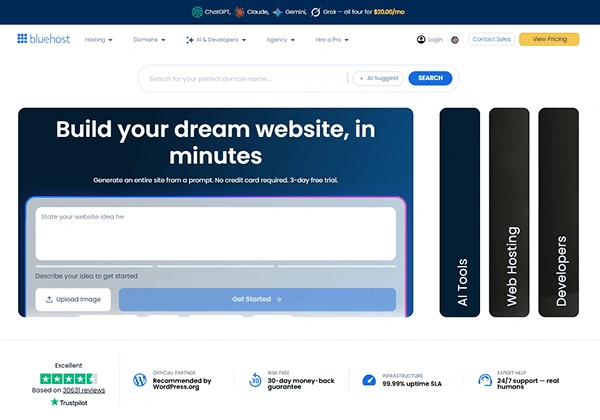
Bluehost stands out as the strongest overall website hosting provider in 2026, delivering 99.99% uptime, premium Oracle Cloud infrastructure, and a free domain with automated backups for just $2.09/month.
| Tested Uptime | Average Loading Time | TTFB |
| 99.99% | 1.1s | 140ms |
Key Features:
- Free domain name and SSL certificate
- Automatic daily website backups
- Free domain transfer included
- Expert support
| Pros | Cons |
|
|
Pricing:
The basic plan starts at $2.09/month for developers, while their advanced packages scale up to $15.99/month.
Best for:
Complete beginners and creators launching their first WordPress website.
#2 Hostinger – Best Budget Web Hosting
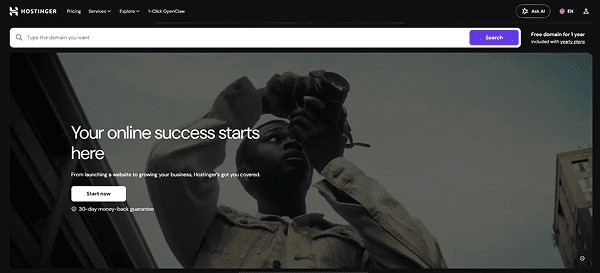
Hostinger gives the lowest market entry price at $2.99/month without sacrificing performance. It has 13 global data centers to handle sudden traffic spikes.
| Tested Uptime | Average Loading Time | TTFB |
| 99.97% | 1.3s | 165ms |
Key Features:
- Lightning-fast LiteSpeed Web Server optimization
- Access to 13 global data centers
- Custom-built hPanel dashboard for easy management
- Weekly automated remote data backups
| Pros | Cons |
|
|
Pricing:
Entry plans open at $3.99/month with a renewal price of $18.99/month.
Best for:
Budget-conscious users and small websites expecting sudden traffic surges. For large organizations with complex applications and high-traffic platforms, reliable infrastructure is especially important when planning enterprise web development.
#3 SiteGround – Best Managed WordPress Hosting

SiteGround offers premium managed WordPress hosting powered by Google Cloud infrastructure and built-in SuperCacher technology. It has the cleanest support team we tested.
| Tested Uptime | Average Loading Time | TTFB |
| 99.99% | 0.9s | 95ms |
Key Features:
- Premium high-performance Google Cloud infrastructure
- SuperCacher speed plugin configuration
- Advanced-level security and protection
- Free automated website migration tool
| Pros | Cons |
|
|
Pricing:
The basic plan starts at $2.99/month (12-month subscription term).
Best for:
Professional WordPress creators, growing business platforms who demand speed.
#4 GreenGeeks – Fastest Web Hosting Service

GreenGeeks is the fastest recommended website hosting of all 20 hosts tested that has eco-friendly infrastructure. It matches 300% of its power usage with renewable energy offsets.
| Tested Uptime | Average Loading Time | TTFB |
| 99.98% | 0.8s | 90ms |
Key Features:
- 300% green renewable energy infrastructure match
- One tree planted for every single signup
- LiteSpeed server caching layers
| Pros | Cons |
|
|
Pricing:
The basic plan starts at $2.95/month, and their advanced packages scale up to $8.95/month, giving you dedicated resources.
Best for:
Eco-conscious brand owners, sustainability-focused people, and creators demanding top-tier server response time.
#5 HostArmada – Best Affordable All-Inclusive Hosting
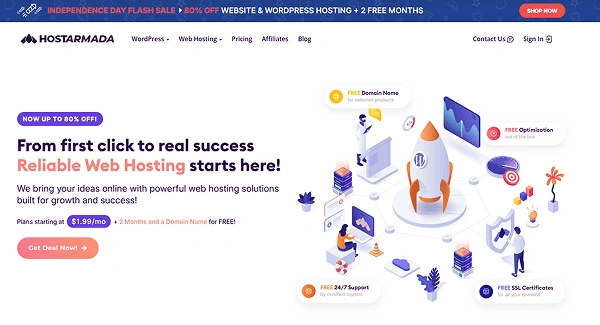
HostArmada delivers outstanding value at $1.49/month, packing every feature from domains to active malware removal in one cost-effective website hosting plan.
| Tested Uptime | Average Loading Time | TTFB |
| 99.96% | 1.4s | 170ms |
Key Features:
- Free custom domain registration and SSL setup
- Complementary global CDN integration
- Free professional business email account
- Automated backup
- Malware removal
| Pros | Cons |
|
|
Pricing:
Starts at $1.49/month and goes up to $23.05/month with the Speed Reaper web hosting plan.
Best for:
Website owners who want a complete, all-inclusive package without hidden technical add-ons.
#6 IONOS – Lowest Entry-Price Web Hosting

IONOS offers the cheapest starting price at just $1.00/month, giving you a free domain and SSL security backed by highly stable backup servers
| Tested Uptime | Average Loading Time | TTFB |
| 99.99% | 1.5s | 190ms |
Key Features:
- Backup systems
- Free website address (domain) and security certificate
- Personal customer support agent
- Easy one-click setup
| Pros | Cons |
|
|
Pricing:
Entry-level plans cost just $1.00/month for the first year, with advanced business and agency packages scaling up to $10.00/month for unlimited storage and faster database performance.
Best for:
Small local businesses and simple landing pages looking for the lowest possible starting cost.
#7 DreamHost – Best for Multi-Site Hosting
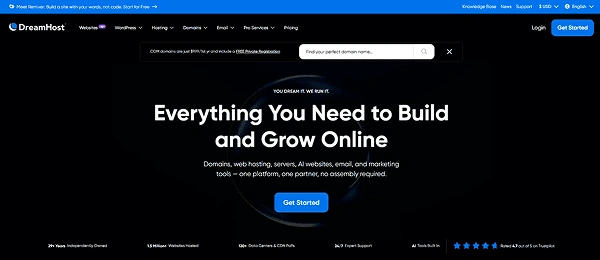
DreamHost is perfect if you need to run several websites. It allows hosting of up to 25 separate sites on their starter plan for a cost of just $0.11 per site.
| Tested Uptime | Average Loading Time | TTFB |
| 99.95% | 1.6s | 185ms |
Key Features:
- Host up to 25 different websites at the same time
- Long 96-day full money-back guarantee
- No limits on monthly visitors or storage space
- Automatic daily backups
| Pros | Cons |
|
|
Pricing:
The multi-site starter tier begins at $2.89/month. The advanced fully managed WordPress plans scale up to $12.99/month.
Best for:
Freelance website builders and agencies who need to manage multiple client sites under a single budget.
Which Web Hosting Service Is Right for You? (By Use Case)
Different websites have different technical requirements. This section mentions the best web hosting services based on your requirements. Hosting is only one part of a successful online presence. Your website’s visual design, usability, responsiveness, and overall user experience also matter, so professional web design services can complement the right hosting setup.
Fun Fact: The world’s first website hosted in 1991 is still live today at info.cern.ch.
Best Web Hosting for Beginners
Bluehost is the ultimate choice if you are launching your first website. It provides a simple setup process, cPanel-lite dashboard, and a built-in AI website builder to get you online fast. You also get a free domain name and direct access to 24/7 human support agents whenever you need technical assistance.
Best Web Hosting for WordPress
SiteGround is built from the ground up specifically to optimize WordPress performance. Running entirely on Google Cloud infrastructure, it uses SuperCacher technology to give your pages blazing- fast load speed. It also automates your software updates and includes one-click staging environments to test website changes safely.
Best Web Hosting for Small Businesses
Hostinger is the ideal web hosting services partner for growing small businesses that require solid reliability without premium price tags. It has 13 global data centers and gives excellent loading speeds for local customers. Its architecture easily handles sudden marketing traffic spikes without performance slowdowns.
Best Web Hosting for Multiple Websites
DreamHost is the smartest choice if you need to run several websites without breaking the bank. Their budget-friendly plan allows you to host up to 25 separate websites simultaneously. This massive allowance delivers the absolute cheapest per-site hosting cost of any provider we tested, making it highly economical.
Best Eco-Friendly Web Hosting
GreenGeeks is the top recommendation if you want high-performance web site hosting services that minimise your carbon footprint. It matches 300% of the electricity your website consumes with renewable green energy certificates. Well known for its fastest load-handling speeds, they plant one tree for every single user sign-up to directly combat global deforestation.
Domain Hosting vs. Web Hosting – What’s the Difference?
Before you write a single line of code or spend money on server fees, you need to understand that domain hosting and web hosting are entirely different technical things. If you mistake one for the other, you risk buying tools you cannot use or delaying your website’s launch.
To keep it simple, think of your internet presence like setting up a telephone line. Your domain name is the actual phone number listed in the public directory that people dial to find you. Your web hosting is the underlying phone network infrastructure, wires that physically connect and transmit the voice data back and forth.
| Feature | Domain Hosting | Web Hosting |
| What It Is | Human-readable name that points to an IP address (e.g., yoursite.com) | The physical server space storing your digital files |
| What It Stores | DNS routing records and ownership records | HTML files, media assets, databases, stylesheets |
| How It Functions | Redirects internet browsers to a specific server location | Processes code execution |
| Average Cost | $10 to $20 paid once a year | $24 to $120 per year |
| Key Metric | TLD extension type (.com vs .org) and name length | CPU processing power, RAM, bandwidth |
| Importance | Helps users find you | Keeps your site running |
Final Verdict – Which Web Hosting Service Should You Choose?
Choosing the right web hosting service depends on your budget and website goals. Bluehost is our top-recommended website hosting provider for 2026 because it gives you the best mix of reliability and easy tools for beginners. If you want to keep your costs as low as possible without losing speed, Hostinger is the best budget pick. For growing businesses that need fast managed WordPress performance, SiteGround is the top choice.
Before you buy, always look past the cheap starter rates and check the renewal prices. We recommend signing up for a yearly plan to get the best discount with a money-back guarantee period.
Now that you know how to choose the perfect home for your website, you can start designing your pages without any coding skills.
Web Hosting Services: Frequently Asked Questions
What is a web hosting service?
A web hosting service is an online platform that allocates server space and internet connectivity for your website, making it globally accessible. When you buy web hosting, you rent a space on a powerful computer that stays online 24/7. This can store your text, images, etc., delivering them to users whenever they visit your web link.
What is the difference between web hosting and domain hosting?
The main difference is that domain hosting provides your website’s text-based address, while web hosting provides the actual server space where your website files live.
Which is the best web hosting service in 2026?
Bluehost is the best overall web hosting service in 2026 because it delivers flawlessly 99.99% uptime guarantee. It has premium Oracle Cloud infrastructure and beginner-friendly tools.
What are the types of website hosting services?
The five main types of web hosting services are Shared, VPS (Virtual Private Server), Dedicated, Cloud, and Managed WordPress hosting.
How much does web hosting cost per month?
Web hosting costs between $1 and $15 per month for entry-level shared plans. Mid-tier VPS plans range from $20 to $80 monthly, and premium dedicated enterprise servers cost over $100 per month.
What should I look for in a web hosting provider?
You should look for a web hosting provider that offers a 99.95% or more uptime guarantee, fast server response, and 24/7 live human customer support. Additionally, ensure the starter package includes security tools like a free SSL certificate, automated daily backups, and transparent renewal pricing.
Is free web hosting a good option?
No, free web hosting is not a good option because it has severe performance limitations and slow loading speeds with zero technical support. Free platforms usually force unwanted third-party advertisements onto your website and lack basic security protocols. This makes your site highly vulnerable to cyber attacks and sudden data loss without any recovery options.
What is the best hosting site for beginners?
Bluehost is the best hosting site for beginners because its incredible setup wizards are easy to understand and have custom WordPress integration tools. They provide a very clean user dashboard, a free domain name for your first year, guided website creation tools that every beginner needs, and 24/7 live chat support.
Do web hosting services include a domain name?
Yes, many top web hosting services include a free domain name for the first year when you sign up for their annual plans. Web hosting providers like Hostinger and Bluehost bundle a domain extension to simplify your setup process. But if you choose a month-to-month plan, you will need to purchase your domain separately.
Which web hosting services are recommended for small businesses?
Hostinger and IONOS are highly recommended for small businesses because they provide rock-solid server reliability with professional email accounts. Hostinger has exceptional speed and handles marketing traffic spikes smoothly. IONOS gives a secure infrastructure and local business features at minimal overhead expenses.
Sources: