Everyone who is running a business is looking for several ways to grow their brands or connect with overseas clients and target audiences for better profits. But the hard part is that it cannot be done without an online presence, or, say, a well-furnished website that speaks on your behalf. Creating a user-friendly and appealing online domain is a necessity today, which requires a long and strategic web design process, executed by industry experts. Businesses can work with professional web design services to create layouts that align with their brand identity, audience expectations, and conversion goals.
That’s why today we are going to decode some critical aspects of designing and what to expect from a reliable firm, along with common mistakes to avoid.
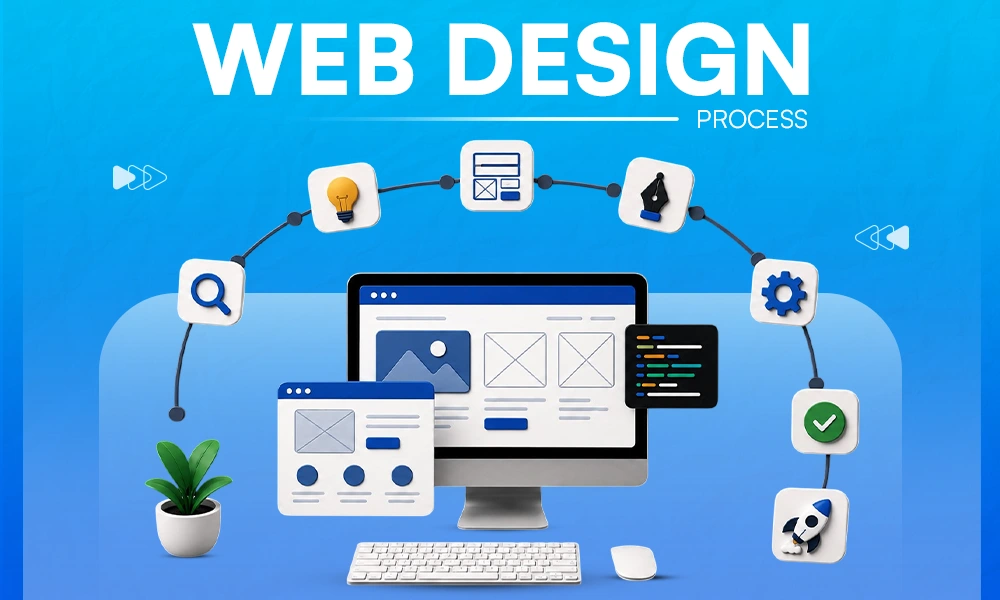
- What is a Web Design Process (and Why It Matters)
- Step 1 — Discovery: Goals, Audience, and Scope
- Step 2 — Planning: Sitemap and Site Structure
- Step 3 — Web Design: Wireframes to Visual Design
- Step 4 — Content: Writing and Gathering What Goes on the Site
- Step 5 — Development: Turning Designs Into a Working Website
- Step 6 — Testing and Quality Assurance
- Step 7 — Post-Launch Support and Maintenance
- How Long Does the Whole Web Design Process Take?
- Common Mistakes That Slow Down the Process
- Frequently Asked Questions
- What to Expect Working With Digitaladdex?
- Conclusion
What is a Web Design Process (and Why It Matters)
The web design process is a multi-layered, structured plan that includes so many crucial aspects like finding audiences, planning the sitemap, making room for visual aesthetics, improving technicalities, and many more elements that make an ideal, user-friendly website.
It has become a necessity more than a choice today for all businesses out there due to invisible and high-volume competition in every genre. This approach gives a website more personalised, optimized, and refined behavior in front of its visiting traffic. But it’s not that simple; now we are going to break down all the elements of this procedure so that you understand why each stage is important in its own way.
Step 1 — Discovery: Goals, Audience, and Scope
This is the first and most important phase of the web design process because it revolves around aspects such as discovering the right niche in the category, creating strategic goals, finding ways to attract audiences, and measuring the growth trajectory of the project.
For all these considerations, you need to hire a reliable firm for the website development process, like Digitaladdex, which has industry-renowned experts and expert teams that can deeply analyze these factors before moving in any direction. Also, without the proper understanding of web design software programs, failure rates are significantly high, and losses become unrecoverable.
Step 2 — Planning: Sitemap and Site Structure
The next step involves planning for curating the perfect layout for websites, which can be done by curating categorized sitemaps and site structure so that each aspect of your brand (products or services) is highlighted properly and the audience can navigate easily to different sections of your website.
Both things are equally important, as stacking and building architecture creates a streamlined appeal which improves the concentration of viewers with attached elements and makes the text more readable.
Step 3 — Web Design: Wireframes to Visual Design
Here comes the most creative part of this segment: you see what appeals to the audience sometimes is the color theme and the perfect alignment of elements such as boxes and containers rather than content or products, which is why focusing on them is very integral.
To make your website eye-pleasing, you can opt for color schemes that draw attention at a blink, like red-white, yellow-blue, white-purple, etc. Next, you must check that all the text and images inside the containers are visible in high quality while simultaneously checking that all the boxes are placed with margin spaces to avoid overlapping of elements.
Read more: Responsive Design: What It Is, Why It Matters, and Best Practices for Modern Websites
Step 4 — Content: Writing and Gathering What Goes on the Site
Content plays a very pivotal role in the website creation process because without it, there is nothing that can make the user stay, spend time, and hop for inquiries. That is why ignoring the important, high-quality texts, CTAs, and articles will damage your credibility the most.
The main thing is that without content, you can never grow your website and establish your place in search engine ranking pages, and important factors like domain and page authority also decline.
Adding intriguing topics that align with your categories improves your overall performance and invites a new audience, which can add profits to the business while simultaneously boosting traffic due to new insights and research present in your articles.
Step 5 — Development: Turning Designs Into a Working Website
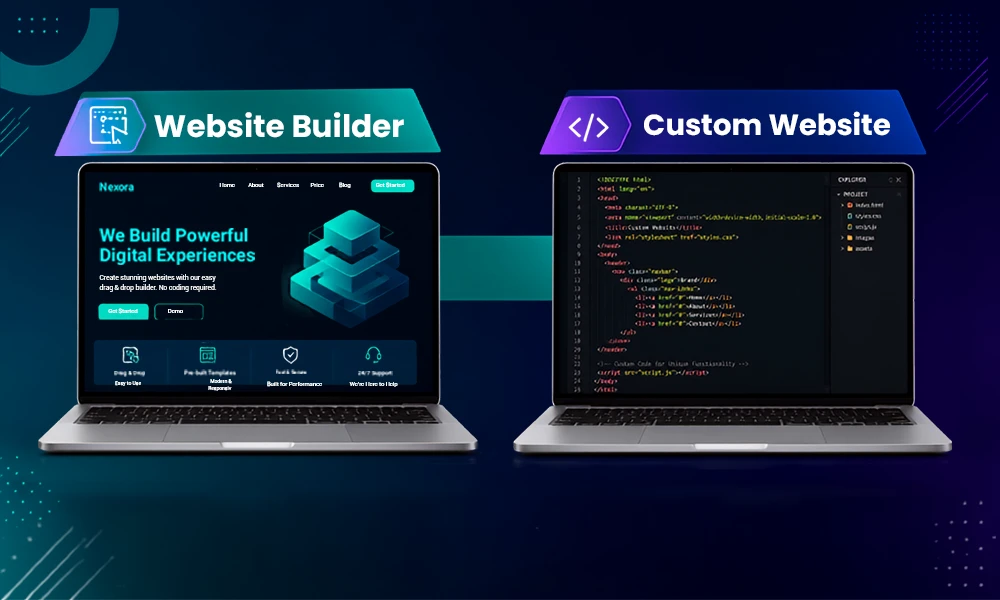
Web development process is a vital part of the overall creation of software present on the internet, as it primarily focuses on the development, maintenance, and deployment of all the units and web pages. Professional website development services help turn approved designs into secure, functional, and scalable websites while ensuring the technical foundation supports business requirements.
It is also important to build a secure framework for websites that is hard to breach and free from all the frustrating things like bugs and glitches. This process is divided into three segments, which are:
Front-End Development
Front-end development is a frontline part of website development as it primarily focuses on the development of the sections which are noticed by the audience the most. This includes creating web pages, toggles, haptics, plugins, etc with the help of languages like HTML and JavaScript.
Back-End Development
Back-end development is a crucial factor for web development, as without this, it won’t even exist. These procedures are necessary for the creation of the architecture of the platform, to foster databases, utility expansion, and to secure the site with multiple layers of coding with languages like Python and PHP.
CMS Configuration
CMS ( Content Management Systems) are important to manage the vast databases, verify admins, and provide control to designated members for maintenance or changes. The most suitable example of a CMS is WordPress, with its precise control panel, which allows different designations: Owner, Developer, and Writer to maintain moderation and abolish unwanted entries.
Step 6 — Testing and Quality Assurance
Before final deployment of websites on public domains, there are some rigorous testing and quality checks done to confirm the actual state of the developed products and fix the areas that contain room for improvement.
Practices like function testing allow DevOps to view the composition, action, haptics, and response of every element present in the webpages to measure their performance, while cross-browser compatibility checks are to confirm the stability and rendering speed of the site on different search engines.
All these testing procedures are responsible for making a perfect platform to boost user engagement and cater to profitable leads.
Step 7 — Post-Launch Support and Maintenance
Last but not least, we have to talk about the importance of post-launch support and maintenance of the website after its deployment in the public domain. Without doing these practices, many components of your online platform might develop some loose ends, which makes it vulnerable to systematic issues and open gateways for malicious entities that can breach user data and damage wireframes.
Prioritize ensuring that your website receives regular security patch updates for data protection, fixes for every faulty page or other parts of themes, and improved compatibility across devices. Your website can be best in class, but if you ignore these factors, sustainability will be compromised. Ongoing website maintenance services can help keep these areas updated while reducing security risks, fixing technical issues, and maintaining website performance after launch.
How Long Does the Whole Web Design Process Take?

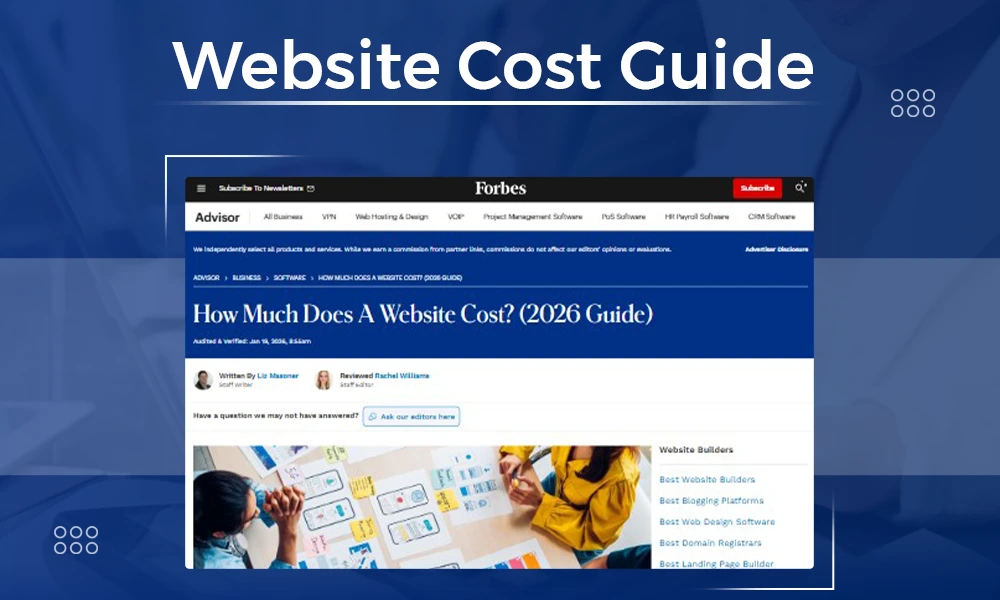
Well, the answer for this totally depends on some major factors like the size of the project, team occupancy, selection of tools, optimization, and most importantly, the skill or experience level of the member working in the firm. E-commerce projects generally require more time because e-commerce website development involves product catalogs, payment gateways, customer accounts, shopping carts, security, and other interactive features that require additional planning and testing.
All these metrics are responsible for judging the duration, and a web design company decides deadlines for clients by considering these conditions.
But for a rough idea, we have created a chart that will tell you the average duration of the website design process so that you can build your expectations around it.
| Product | Duration |
| Landing Page | Approx 1-2 days (with optimization) |
| Website for small businesses (15-20 pages) | 3-6 Weeks |
| Corporate Website (30-50 pages) | 10-12 Weeks |
| E-commerce Website or Shopping Store (150+ pages with daily additions) | 15-20 Weeks ( With Constant Building Program and designated team) |
| Large Firms (150+ pages, daily additions and service listings) | 15-20 Weeks ( With Constant Building Program and designated team) |
Common Mistakes That Slow Down the Process

Last but not least, we have to talk about some common mistakes that almost everyone is likely to make who is new to this domain, and if you are one of them, then you should be aware of them so that you won’t face any pitfalls in your project and move forward at your own pace.
- Not involving haptic responses, toggles, and navigation icons allows users to wander around your sites. Thus, your bounce rates will skyrocket due to improper accessibility.
- Strategic failures such as unrefined wireframes or a lack of a defined structure can lead to a constant loop of changes, and everything will get delayed, pushing your project away from the deadline of deployment.
- The addition of complex elements, heavy-duty haptics, and a vast set of animations on all the webpages can increase the rendering speed of your website, which makes it inaccessible for users to view your content or service.
- Not testing the design utilities, plugins, interlinking, and other technical aspects of web design leads to drastic failures in performance and longevity of your business.
- Make sure you and your selected firm have no goal alignment issues, and you both do not create any negligence in terms of payments, delivery, and maintenance of the site.
Read more: DIY Site Builder: The Complete Guide to Creating a Website in 2026
Frequently Asked Questions
How many revisions are usually included?
Before deploying any website, 2-3 rounds of revisions are conducted, which ensure the platform’s overall performance, stability, and user retention rate, which are required to measure sustainability.
Can content writing happen while the website is being designed?
Yes, content writing can be done while the website is being designed. Publishers can store the articles provided by writers in the content bank and later post them according to the completion schedule of web pages and the deployment of servers.
Do I need to buy hosting before development starts?
Yes, for a smooth deployment of your website in the public domain, you need to buy hosting before development starts so that you can own your trademarks in the online realm. After deployment, you will have secure encryption for visitors.
What’s the difference between web design and web development?
There is a simple difference between web design and web development is that in web design, you just have to create the elements, designs, haptics, and responses that are presented directly to the users. While in web development, you have to focus on various other things like security protocols, CSS frameworks, constant testing, and the maintenance of the platform.
What to Expect Working With Digitaladdex?
Digitaladdex is a next-generation web design built to scale your growing business and provide best-in-class utilities to support your venture with scalability, sustainability, and reliability. With Digitaladdex, you can expect some of the best advantages that are vital for your enterprise web development, which are:
- Discovery-first approach for creating structure, layouts, color tones, themes, etc according to your specific niche.
- Transparent communication for all clients during the development, design, and deployment phases.
- Dedicated project manager for each client to provide expert advice, recommendations, and ways to improve the growth trajectory of businesses.
- Custom design according to the demand of every user to cater to personalized results.
- SEO-friendly development to provide better rankings on search engines
- Mobile-friendly Websites to cater to targets from devices other than PC and engage them with a unique design.
- Regular progress updates to provide constant assurances about the development procedure.
- Quality assurance for the visual designs, haptics, themes, and servers.
- On-time delivery without missing any deadlines
- Ongoing support and maintenance of your website for better stability.
Conclusion
This was complete data about the web design process and how it plays a vital role in establishing your business in today’s era due to the robust competition in every niche; neglecting it can make you fall behind the race among your competitors. Opting for design and development practices by expert firms can significantly improve your overall business, generate profits, and increase online reach to your target audiences.
But if you are reaching out to or working with agencies for the first time, you can make some common mistakes, like not defining accurate goals or constant development discussions, so make sure to avoid them. You can look for more such intriguing content about web design, development, and deployment on Digitaladdex. Stay tuned!